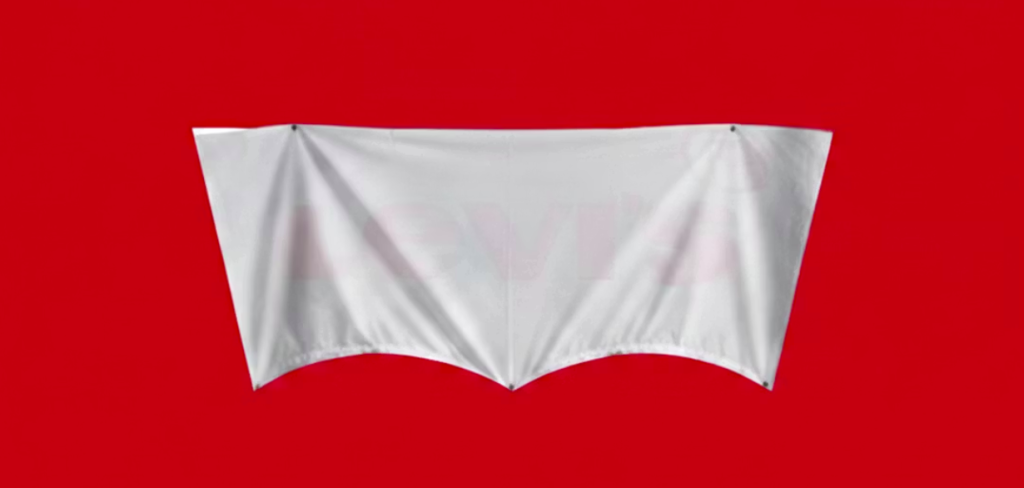
During the 2026 FIFA World Cup, matches held at Levi’s Stadium in Santa Clara, California triggered the governing body’s clean stadium policy — which requires all non-sponsor branding to be removed or covered before kick-off. The Levi’s name was hidden. The batwing logo remained visible. Levi’s issued a press release stating that fans recognised the brand immediately without the name present.
The batwing was introduced in 1967. Its shape is derived from the arcuate stitching on the back pockets of Levi’s jeans, a design element in use since 1873. It has no wordmark dependency, the mark functions as a standalone silhouette.
- FIFA’s clean stadium policy exists to protect official World Cup sponsors; any non-sponsoring brand with naming rights must cover its branding at match time
- The batwing remained visible throughout — the name was covered, the logo was not
- Levi’s framed the moment publicly as evidence of standalone logo recognition, without the name or any other brand identifier present
- The batwing operates without colour dependency or wordmark — recognition relies entirely on shape
A logo that requires its name next to it to be understood is a name, not a mark. The fact that the brand was still recognizable tells you something specific about where the equity actually lives: in the shape, not the text.
Brand recognition is built through consistency over time, not campaigns. The batwing has appeared on the same product, in the same form, for nearly 60 years. The World Cup moment didn’t create that recognition but revealed it. When a logo can function without its name, it’s a sign that enough people have seen it enough times, in enough contexts, that the shape alone carries the meaning.