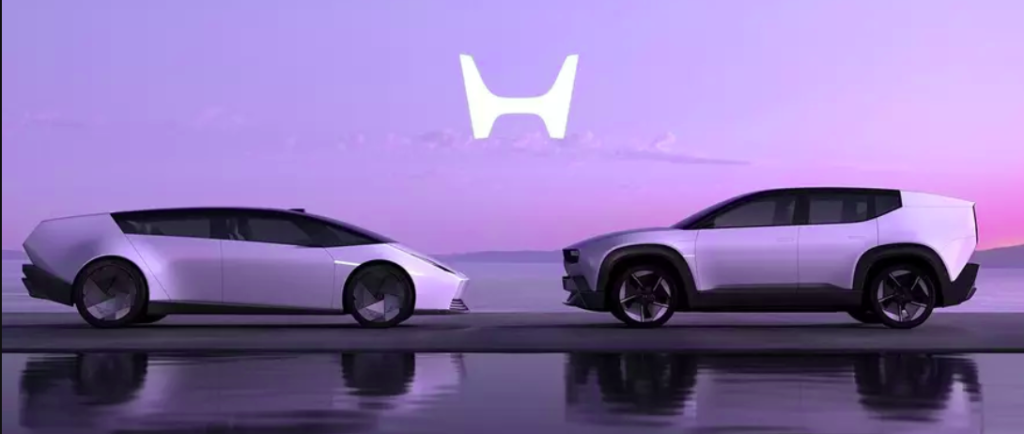
On May 14, Honda CEO Toshihiro Mibe held a formal business briefing laying out a significant strategic reset. The headline: Honda is pulling resources back from electric vehicles and concentrating on hybrid, the technology its customers are actually buying. The company announced plans to launch 15 next-generation hybrid models globally by March 2030, with large-scale hybrid models for North America arriving in 2029. EV battery production lines at its joint venture with LG Energy Solution are being partially converted to hybrid battery production. Ohio plants, previously earmarked for EVs, will pivot to gasoline and hybrid vehicle production.
Alongside the powertrain reset, Mibe announced a “Triple Half” target: cut development cost, development timeframe, and development workload each by 50% compared to 2025 levels. Minor model change development timelines will halve starting this fiscal year. Full model change timelines will halve from 2028. The company has also named North America, Japan, and India as its three priority markets — exiting the broad global scatter-shot approach — with China treated separately as a cost competitiveness challenge rather than a growth driver.
- Honda unveiled two prototypes at the briefing: a Honda Hybrid Sedan and an Acura Hybrid SUV, both due on sale within two years
- Next-generation hybrid system costs are targeted to fall more than 30% versus the 2023 system, with fuel economy improving more than 10%
- Honda established Honda Digital Innovation India — a new digital platform company — as part of its India-specific strategy, with tailored models for the Indian market arriving from 2028
- The N-BOX EV for Japan is confirmed for 2028 — Honda isn’t abandoning EV, it’s sequencing it behind hybrid recovery
- Financial target: consolidated operating profit of more than ¥1.4 trillion by March 2029, which would be an all-time record for the company
Honda spent several years telling a convincing EV story. The market didn’t buy it — literally. Rather than double down, Mibe came out publicly, admitted the demand wasn’t there at the pace they’d planned for, and redirected resources to hybrid, which customers are actually choosing. That’s an uncomfortable thing for a major manufacturer to do in public. But a brand that keeps promising things the market isn’t ready for eventually stops being believed. Honda chose credibility over narrative — and that’s the harder call.