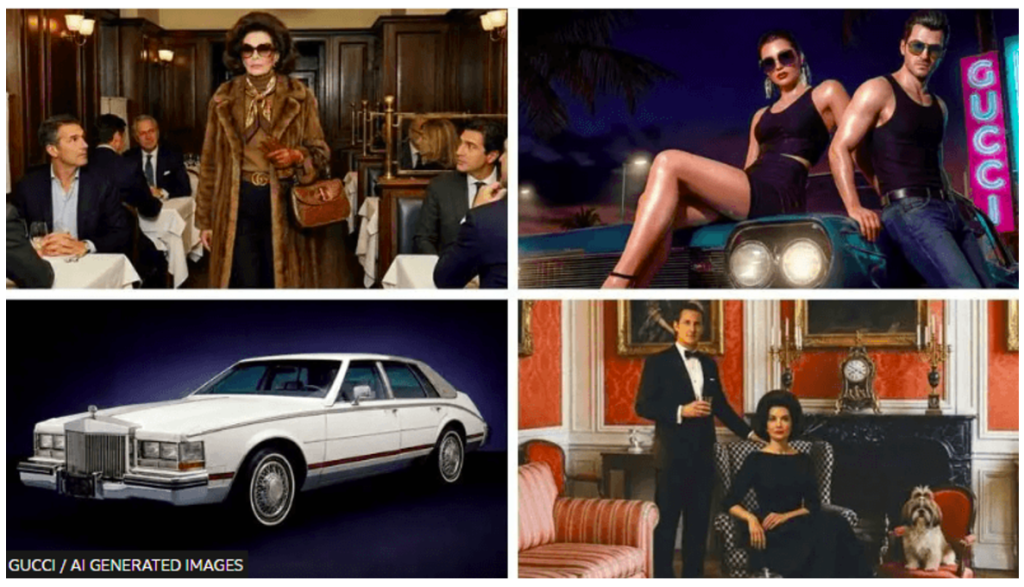
Ahead of new creative director Demna Gvasalia’s debut runway show at Milan Fashion Week, Gucci dropped a series of promotional images labelled “Created with AI.” The internet had thoughts. Comments flooded in calling the work “AI slop,” cheap, and fundamentally at odds with a brand built on Italian craftsmanship and human artistry. Within days, what should have been a hype-building moment became a flashpoint about what luxury actually means in the age of generative AI.
- The images featured surreal scenes: a fur-coated woman in a restaurant, GTA-style backdrops, animated “video game” aesthetics
- Critics argued: if you charge premium prices for handcrafted goods, you don’t get to replace photographers and models with algorithms
- Gucci’s parent Kering was already under pressure after a reported 22% revenue drop in 2025
- Some defenders argued Demna was deliberately provoking a debate about what “luxury” even means — a meta-commentary rather than a cost-cut
AI can generate images, but it can’t generate trust. For luxury brands especially, the perception of human authorship is part of what people are paying for. Using AI isn’t automatically wrong — but doing it in a way that feels like corner-cutting is a brand risk no campaign budget can fix.